I work with many small businesses. Some have embraced AI. Others are curious but cautious. And many workers are understandably fearful of what it could mean for their jobs, their industries, and their futures.
I understand that fear.
I also believe we’re still too close to the beginning of the AI era to fully understand its biggest impact.
Right now, most conversations about AI focus on what it will replace: blue-collar workers, writers, designers, programmers, marketers, customer service representatives, administrative assistants, and countless other roles.
Change is scary, especially when the change seems capable of touching almost every industry at once.
But I also think we may be asking the wrong question.
The bigger question may not be, “What will AI replace?”
The bigger question may be, “What will AI make possible?”
When the internet first became mainstream, many people were also concerned about what it might replace. There were concerns about security, copyright, privacy, access, and disruption. Much of the conversation focused on what might disappear: libraries, travel agents, newspapers, encyclopedias, record stores, phone books, and the way we researched, shopped, learned, communicated, and found information.
And yes, the internet did replace and disrupt many things.
But what we failed to see at the time was much bigger.
The internet did not simply replace the encyclopedia. It put an unimaginable amount of information, research, expertise, and connection at our fingertips.
It leveled the playing field for anyone who had access to a computer. Yes, there were many who did not have that access, and there are still gaps today. But the internet also led to important conversations about the disparity between urban and rural communities, well-equipped schools and those lacking technology, and individuals with economic opportunity and those without it.
It was not perfect. It still is not perfect.
But access expanded.
And eventually, information that once required a library, a university, a professional connection, or a paid expert became available to people from a laptop or a mobile phone.
The internet did not simply replace the travel agent. It changed how people explored the world.
It did not simply hurt newspapers. It created entirely new ways for people to publish, build audiences, share ideas, start businesses, and connect with people they never would have reached before.
Entire industries emerged because access to information became nearly instantaneous.
AI feels similar to me.
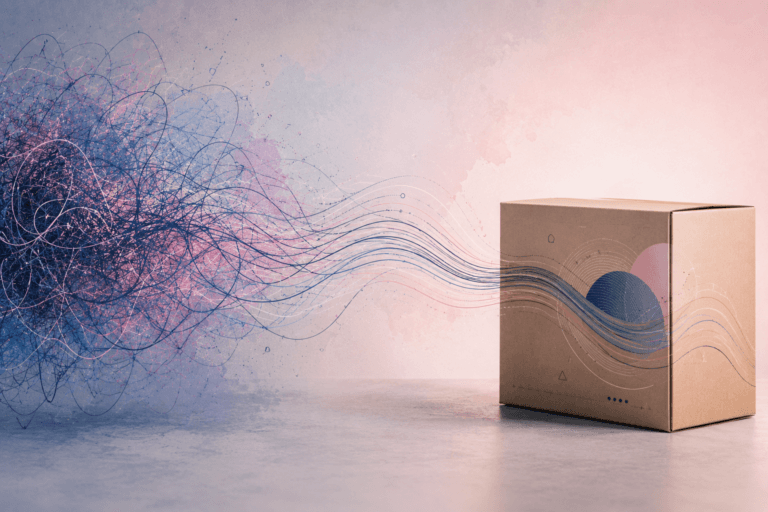
Every major technological advancement reduces friction. The wheel reduced the friction of movement. The printing press reduced the friction of sharing knowledge. The internet reduced the friction of accessing information.
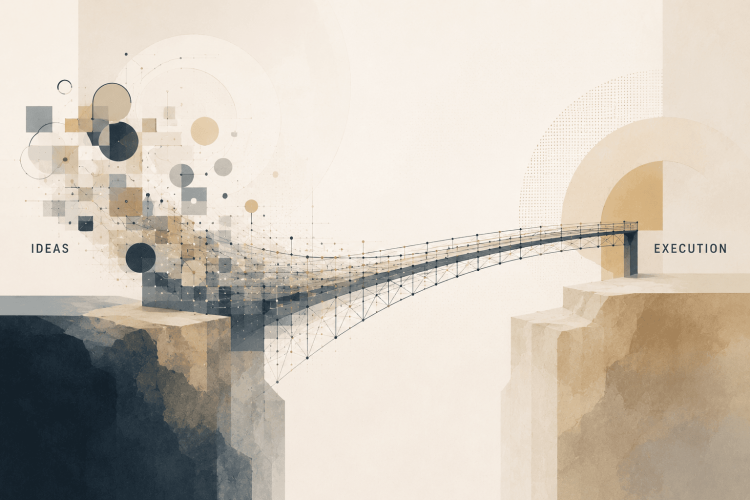
AI is reducing the friction of execution.
That is the part I keep thinking about.
For many of us, the hard part has never been only having the idea. The hard part has been everything required to get the idea out of our heads and into the world.
You have to write it clearly. Organize it. Design it. Edit it. Format it. Research it. Promote it. Build the presentation. Create the graphic. Send the email. Update the website. Make the plan. Follow up. Revise. Try again.
Exhausting!
There is so much friction between thought and production.
AI is starting to remove some of that friction.
It can take a rough idea and help shape it into something useful. It can turn scattered thoughts into a clear outline. It can help create graphics, generate drafts, analyze information, summarize research, brainstorm options, and execute tasks that once required far more time, money, or specialized help.
That does not mean human creativity no longer matters.
I actually think the opposite may be true.
In fact, this is where the conversation about “AI slop” becomes important.
Because AI can help us produce more, but more is not automatically better.
We are already seeing a flood of generic content. Advertising that all look similar regardless of industry. Posts that sound the same. Articles that say very little. Graphics with no real point of view. Marketing copy that is technically fine but emotionally empty. Words that fill space but do not create connection, clarity, trust, or meaning.
That is the risk.
AI can make production easier, but it cannot replace taste. It cannot replace judgment. It cannot replace knowing your audience, understanding the moment, recognizing what matters, or deciding whether something is actually worth saying.
So maybe the real advantage will not belong to the people who can use AI to create the most content.
Maybe the advantage will belong to the people who know what deserves to be created in the first place.
As AI handles more of the repetitive, technical, and production-heavy work, our brains may be freed up for higher-level thinking: strategy, judgment, taste, discernment, imagination, emotional intelligence, leadership, and wisdom.
The value may shift from simply being able to produce something to knowing what should be produced, why it matters, who it is for, and whether it is any good.
That is a very different kind of intelligence.
AI is not just about making us faster writers or more efficient workers. It is not just about saving time on emails or creating social media posts.
It is about expanding what one person, one small business, one creator, one team, or one organization can actually do.
That is what excites me.
I think this matters deeply in marketing.
For small businesses, the temptation will be to use AI to do more. More posts. More emails. More blogs. More ads. More graphics. More everything.
But more is not a strategy.
A business does not become more visible, trusted, or chosen simply because it publishes more content.
A small business needs to understand who it is trying to reach, what those people care about, what problem it solves, why it is different, what customers need to believe before they buy, and where trust is being lost along the way.
That is marketing strategy.
AI can help with that, but only if we use it for more than production.
It can help a business owner think through positioning. It can help clarify the customer journey. It can surface better questions. It can help organize messy ideas into a plan. It can help identify gaps in messaging, follow-up, website content, sales materials, and customer communication.
It can help a business owner move from random acts of marketing to a more thoughtful, consistent system.
That is powerful.
Because many small business owners are not short on ideas. They are short on time, clarity, structure, and execution.
They know they need to market the business, but they are also managing employees, serving customers, handling operations, solving problems, watching cash flow, and making decisions all day long.
AI can help reduce the friction between knowing something needs to be done and actually getting it done.
But it still needs a human mind directing it.
The businesses that benefit most from AI will not be the ones that simply use it to make more noise. They will be the ones that use it to think more clearly, communicate more honestly, and execute more consistently.
That is not a small thing.
Of course, there will be disruption. Of course, some jobs will change. Some may disappear. New ones will emerge. We should not dismiss the fear people feel around that.
But I do think we need to widen the conversation.
Because the greatest impact of AI may not be what it replaces.
It may be what it makes possible.
And the truth is, we probably cannot fully see that yet.
Just as people in the early days of the internet could not fully imagine e-commerce, social media, streaming, remote work, creator businesses, online education, or the way a person could build an audience from a laptop at a kitchen table, we probably cannot yet imagine all the ways AI will reshape work, creativity, learning, business, and human potential.
We are still at the beginning. That is why I am less interested in only asking, “What will AI take away?” I am much more interested in asking, “What could this unlock?”
Because maybe the real story of AI is not that it replaces human intelligence.
Maybe the real story is that it helps us use more of it.